From preparation to action in driving takeovers
How do drivers’ prior tendencies and preparation relate to braking and steering as they take over from automation?
Manuscript submitted
- Context
- VR human-factors experiment
I independently designed the study, implemented its task and warning sequences in Unity and C#, and analyzed driving and physiological records.
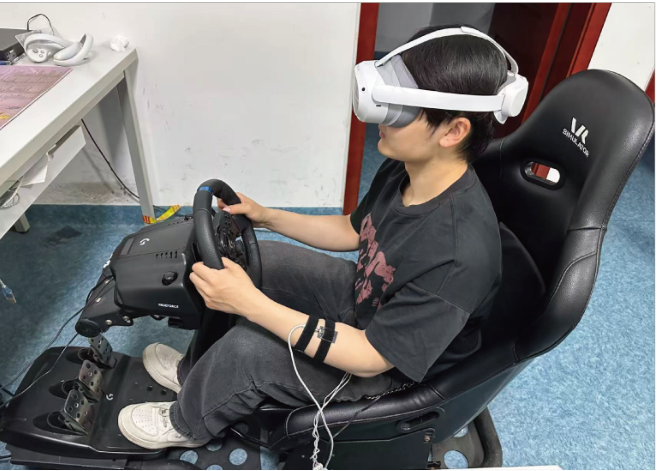 Opens in a new tab.
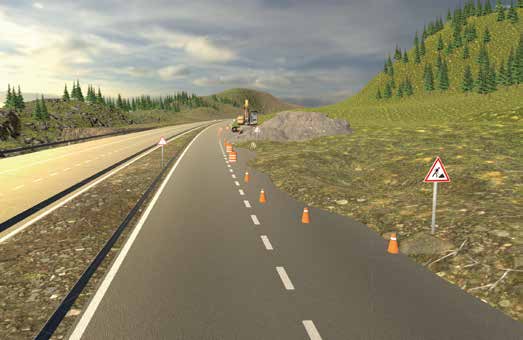 Opens in a new tab.
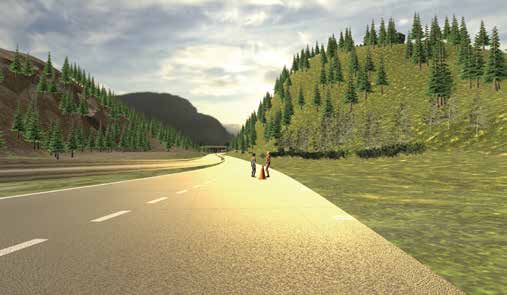 Opens in a new tab.
Understanding preparation
I separated the opportunity to observe the road from the request to take control. This let me examine what drivers understood before acting and how that preparation related to the braking and steering that followed.
1 Automated driving
Letter task in memory-task groups.
2 Observe the road
Monitoring request; automation retains control.
3 Road-situation questions
Answer questions about the scene before taking control.
4 Transfer to manual control
- Scene resumes
- Takeover request
- Manual control
Steering, pedals and speed recorded; workload ratings follow the event.
Cardiac (ECG), muscle (EMG) and electrodermal (EDA) activity recorded throughout.
I considered prior driving tendencies alongside drivers’ understanding of the current hazard and physiological changes during preparation. Following braking and steering beyond the first input let me examine how drivers organized the maneuver and how the developing action sequence related to collision risk.
Further study details and results will be added after publication.